Positive Dog Training
 |   |   |   |   
PetExpertise Home
  
Your Pet Expertise Shopping Cart Cart is Empty
 
Checkout
  Advanced Search
Search
Dog Problem SolvingExpand the Dog Training Aids Category
Barking
Pulling on Leash
Housebreaking
Nipping and Biting Pup
 
Dog Training AidsExpand the Dog Training Aids Category
Training Pouches
Clicker Training
MannersMinder Remote
Collars & HarnessesExpand the Collars & Harnesses Category
No-Pull Solutions
Dog Safety Collars
Dog LeashesExpand the Dog Leashes Category
Bungee Leashes
Dog Couplers
Hands-Free / Waist Leash
Dog ToysExpand the Dog Toys Category
Chew Toys & Treat Toys
Extra Durable Dog Toys
Dog Exercise Aids
Dog Jackets
Gift Certificates
Dog Gift Ideas
Dog Training Treats
Natural Dog Food
Gates, Crates, Pens
Dog Training Books
New Products
 On Sale!
Other Categories
Dog Beds
Dog Safety Gear
Dog Poop Bags
Puppy Supplies
For Small / Toy Dogs
For Giant Dogs
Multiple Dog Supplies
Green Dog Products
Bulk Items
Best Sellers
View All Products


 Dog Blog Article: Is Training Always the Answer? Training Vs. Management By Casey Lomonaco

I always laugh when my business partner Steve Benjamin tells a story about one elderly lady who called a few years ago asking for training assistance. This lady had a toy breed dog, weighing about seven pounds. She identifies toilet paper thievery and roll dissection as her dog’s behavior problem and wants lessons with Steve to correct the problem.

Steve asks, “how tall is your dog?” The lady responds, “about ten inches high.” Steve then asks, “how high is the handle on your bathroom door.” The lady responds, “a few feet.” Steve tells her, “You have two options. You can either pay me for numerous sessions to come out and train a new behavior, or you can close the bathroom door.”

Dead silence on the phone. Did she hang up?

No, she remains on the line, speechless and flabbergasted at his suggestion. “You mean I have to remember to close the bathroom door all the time?”

I had a similar experience at the classroom recently. One of my clients came in looking overwhelmed, unhappy, and frustrated at the beginning of class. She’s normally a very upbeat and perky individual, something was wrong.

“Julia, what’s wrong?” I asked as she stood next to her beautiful dog Sampson. Julia tells me that her dogs eat twice a day, in the morning and evening. Every single feeding time, her dogs fight over food, resource guarding their meals from the other household dogs. Many owners are devastated by dog-dog resource guarding, despite the fact that the behavior is evolutionarily advantageous; it’s normal dog behavior and the majority of dog-dog resource guarding behaviors are highly ritualized and never involve a physical altercation. The dogs in Julia’s home were no different, none of the resource guarding incidents involved any sort of physical contact between the dogs, just growling, hackling, and barking.

Remembering the Tao of Steve, I said, “Julia, you have two options. We can either set up a number of private lessons to work on the problem; or you can feed the dogs in separate rooms.”

Dead silence as she looked at me. Steve warned me about this.

Finally, Julia says, “we’ll try it.

Two days later, Julia returns to class, a beaming smile on her face and gives me a huge hug. Pleased to her significantly happier than at our last interlude, I laughed. “How are things going at home?” Julia tells me there have been no fights since our conversation, and that both she and all the dogs are more relaxed and happy together, the dogs eat at a more leisurely pace instead of inhaling their food; she no longer has to expect at least two fights a day in her house over valuable resources.

TWO (SOMETIMES THREE) OPTIONS

There are two possible solutions to this and other common behavior problems – training and management.

Training should focus on the development of alternative, incompatible behaviors. A dog cannot be begging food from guests or jumping on guests if he is lying on his bed calmly. A dog cannot be barking at the dog walking across the street if he is targeting his nose to your hand with duration. Focus on what you want the dog to do instead of the unwanted behavior and develop a training plan to get you there.

Management is the practice of removing opportunities for an animal to engage in or practice unwanted behaviors. Management does not necessarily teach the dog anything, but often is important for your dog’s safety and to keep him from rehearsing bad behaviors.

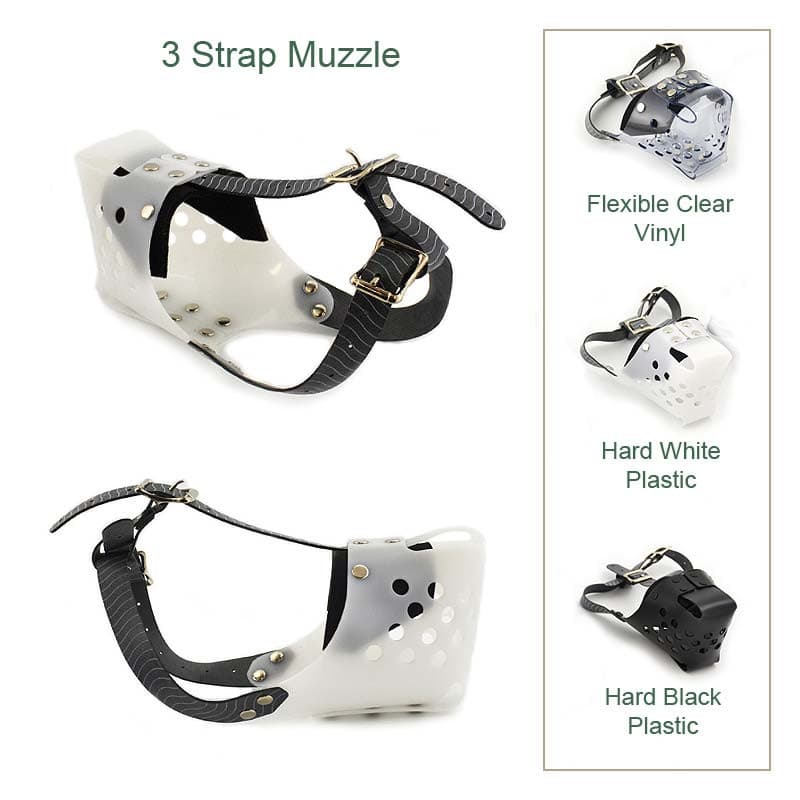
Management is closing the bathroom door; it is feeding the dogs in separate rooms. Management is using crates to prevent potty accidents and destructive behaviors; it is using a leash to keep a dog next to you on a walk as opposed to training a dog to heeling and team walking reliability off lead. Management is baby gates and tethers, muzzles for biting dogs, or Calming Caps. Management is keeping your counters clean to prevent counter surfing; it is female dogs in heat isolated from unneutered males.

Behaviors like snatching food from counters or trash cans, dissecting things (including toilet paper, Kongs, sneakers, and raw meat), relief for a full bladder, resource guarding and chasing squirrels on a walk are extremely reinforcing behaviors for dogs; all of these common dog behavior “problems” have actually been selected for by tens of thousands of years of evolution. They’re the things dogs do.

For all of these behaviors, you can train alternative, incompatible behaviors; but the rub with this is it only works if you are there to reinforce the training. You can train your dog to stay away from the counters when you are home, but if there is a steak on the counter and your dog is home alone with access to it all day, his evolutionary bias towards scavenging will likely shine through that training and you will come home to a counter that no longer has any food and a very happy, satiated dog who just got reinforced nicely for his counter surfing behavior.

For many of the behaviors, a combination of management and training is best. For some of them, management is all you need if you are able to do it consistently.

There is a third option in dealing with many “unwanted behaviors;” redirection. If your dog likes to dig, give him a digging pit or sandbox to play in. If your dog likes to chew or dissect, give him chew toys, Kong toys, etc. If your dog likes to scavenge, set up a kibble hunt in your house/yard or purchase a food dispensing toy. If your dog likes to chase, try the Chase-It or teach him to retrieve! Digging, chewing, nipping, chasing, jumping, dissecting are all natural dog urges – your dog will be happiest if he can engage in these activities safely.

Showing your dog what is expected of him when you are home through training, managing for his safety and success when you are unable to train, and providing a healthy outlet for the natural doggy urges which make him happiest are the keys to a well-behaved dog and a happy household.


Casey Lomonaco is a graduate of the Karen Pryor Academy for Animal Behavior & Training 
and proprietress of Rewarding Behaviors Dog Training. 
Casey has published articles and is the 2009 APDT Dogwise John Fisher essay contest winner. 
For more information, visit www.rewardingbehaviors.com or contact casey@rewardingbehaviors.com.

 Comments

Author: jack
I have been through the whole content of this blog which is very informative and knowledgeable stuff, So i would like to visit again.

dog care info
Author: dogtrain
Training should focus on the development of alternative, incompatible behaviors..this video helps a lot..
dog training courses
Author: Casey Lomonaco, KPA CTP
Thank for the positive reinforcement Lesley! I'm glad you enjoyed the article.
Author: Lesley Bowen
This article should be displayed prominently in shelters where people return or surrender their animals (cats too!) because they can't seem to train away some of these behaviors.

Excellent article

Add New Review

*
*

To ensure that a person, not an automated program, is filling this form, please enter the characters you see in this picture. All letters will be shown in their capitalized form.

  Redraw

Characters: 

Main Office: 272A Corte Madera Ave Corte Madera, CA 94925 | Warehouse: Cleveland, OH

Delta Decisions Inc. Your Website Management Services Company. Your E-commerce solution provider - www.deltadecisions.comMoodMaster Media. Your E-commerce solution provider
Payment Methods: Visa, Mastercard, American Express, Discover, Personal Checks, Money Order and Paypal
Better Business Bureau Online Reliability Seal for Pet Expertise

Copyright © 2003 - 2010 Pet Expertise: Positive Dog Training Articles and Supplies


Loading...