

 support@petexpertise.com
Top Products
4 Simple Steps Anyone Can Use to Stop Their Dog from Pulling on a Leash
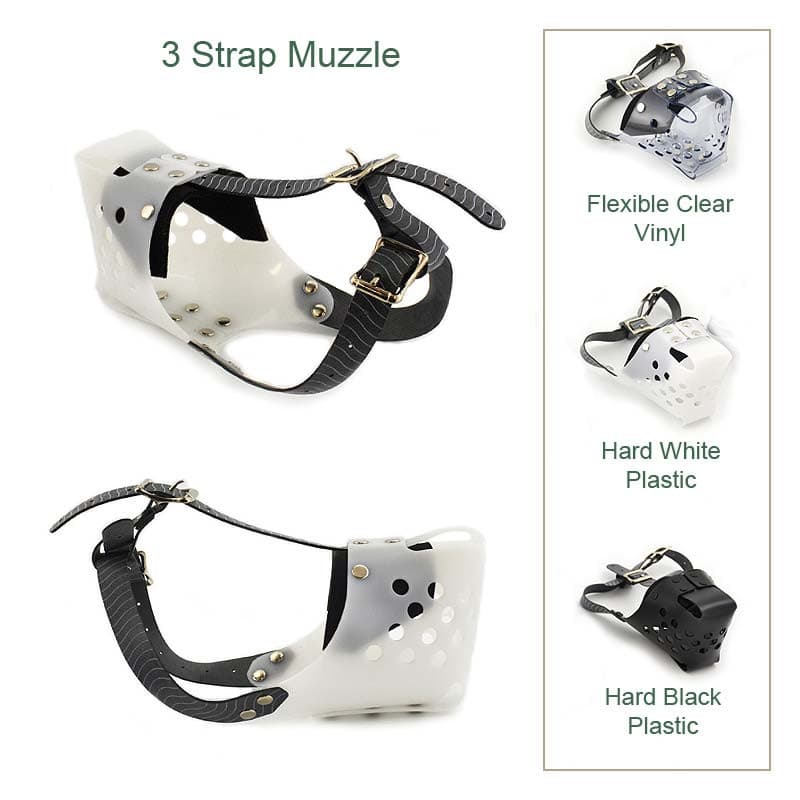
JAFCO Comfortable Dog Muzzles, Hard Plastic & Soft Flexible Versions
BreezeGuard Metal Car Window Guard Screens
Want 10% OFF Your First Order?
Let us email you a COUPON CODE right away. Valid for any purchase, today!
Why Does My Dog Eat Sticks? Tips for Dogs that Eat Sticks, Rocks, & Other Stuff Outside
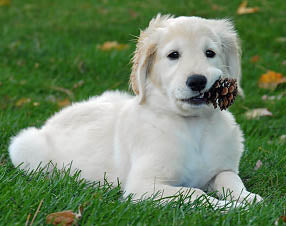 Are you asking yourself "why does my dog eat sticks, rocks, pine cones, acorns or other stuff while out in the yard or on a walk"? Sticks and rocks are especially troublesome since they can injure your dog's mouth and cause intestinal blockages that could require surgery.
Sometimes puppies eat inappropriate things and grow out of it, but other times it can become a habit and continue into adulthood. If your adult dog continues to eat things that are not food, it is a behavior disorder called pica that you should ask your vet about.
I've come up with some tips to train dogs not to eat stuff that they shouldn't. These tips are meant to be used while you are in the great outdoors with your dog and supervising him or her. If your dog is eating things while alone in the yard, the best solution I know of is to make sure your dog's needs are being met (exercise, chewing, etc) and keeping him or her in an place where there is less potential for "getting into trouble", such as a gated area or crate and only allowing your dog access to "the great outdoors" when you are there to supervise.
Training: Here are two different ways to train your dog to leave objects like rocks and sticks alone. If your dog has a very dangerous problem with eating items (such as needing surgery in the past), I would not rely on training alone and would use one of the prevention methods discussed below such as a muzzle.
- Let's start out easy and obvious! If swallowing rocks or sticks is happening while your dog is off leash, sometimes, simply putting a leash on your dog can help you be more aware of your dog so that you can interrupt the him or her from eating things. It is also helpful to keep your dog busy with other activities such as playing with a toy or interacting with you while outdoors. Think of some behaviors you could reward with treats such as checking in with you, playing with a toy or playing "hide and seek" with you. This will keep your dog's mind off of searching for things on the ground to swallow. If your dog is eating things while in the yard by him or herself, the best advice I can think of is to not allow your dog outside unsupervised or create an outdoor area with no "eatables".
- If your dog has only a mild issue with eating things and you would be happy to be able to tell him when you want him to leave something alone, then you can use this method to train your dog to "Leave it". You can substitute the food described in the article with the item that your dog tends to want to eat. Then practice "Leave It" on walks. If you want to take this to the next level, you can teach your dog to automatically leave the item without even having to say "leave it". Instead, you go through the exercise in the article with the object and teach the dog that he or she will be rewarded when she turns away from the item even when you don't say anything. You can even progress to being able to have your dog leave the item when you are out of sight. The trick getting your dog to leave items in "real life" using this method is paying attention to when your dog "leaves" something so that you can continue to reward him or her. If your dog is "leaving" rocks and you are not rewarding it, he or she will quickly learn that this new trick is not so fun and go back to the old habit of picking up rocks. If your dog already has the stick or rock in his mouth you can ask your dog to " drop it" and exchange for a treat. However, be careful of doing too many "drop its" with a dog that likes to pick up objects as you may inadvertently be rewarding the dog for picking things up. Try to do a lot more "leave its" than "drop its" on a walk.

Prevention: For dogs with serious issues with eating inappropriate items you will need to use a device of some in order to be sure to keep him or her safe. Of course, the training exercises explained above are always a good idea too! Please note, that using a one of the methods below is not the recommended solution for dogs that eat items while alone because your dog will likely find a way to get the device off.
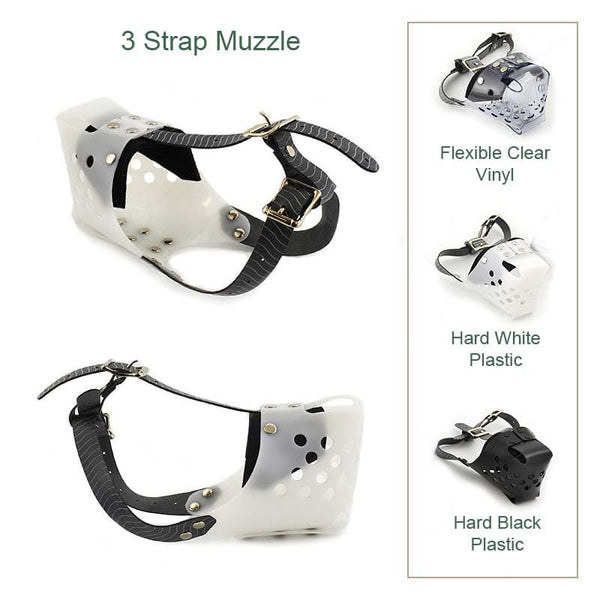
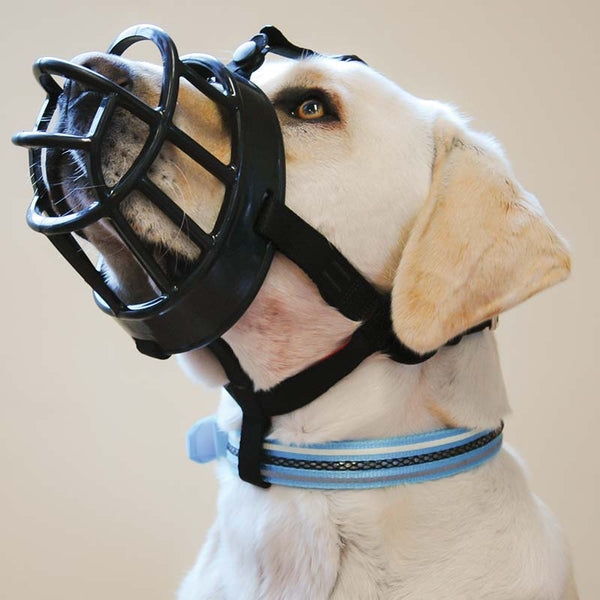
- Many people have success using a basket muzzle on their dog to prevent him or her from eating items. It's important to take a lot of time teaching your dog to wear the muzzle because at first your dog will most likely find it very unpleasant and struggle to get it off. With time, your dog can learn the muzzle means good things like treats and walks.
- Another idea to use to stop your dog from eating objects while outside is a new product called the Outfox. This device was invented to prevent a dog from getting foxtails, but I think would fit the bill perfectly for preventing "grazing".
- Another option that can work is an elizabethan collar (cone) like those put on dogs after surgery. Choose one that is longer than your dog's snout so that your dog cannot reach the ground in order to pick things up. This is probably the most cumbersome of the three choices, but your dog might find it the most comfortable (ask him or her!).
My first dog Gigo, had a big problem with eating sticks and while it was not as relaxing to go for a walk with him, he sure had a great "leave it"! If you have any other ideas to share with us, please leave them in the comments below!
Happy training!
Shop categories

5 comments
 Contact Us
- Choosing a selection results in a full page refresh.
- Press the space key then arrow keys to make a selection.
Great article! I’ve always wondered why my dog eats sticks and rocks during our walks. Your tips on training techniques like teaching ‘leave it’ and supervising outdoor activities are really helpful. It’s important to keep our furry friends safe and prevent them from ingesting harmful objects. I’ll definitely be more vigilant and apply these tips on our walks. Thanks for sharing!
My 10 mo old pug eats little sticks like they are pretzel sticks. She also eats leaves, plants, small rocks and things like that. Im a bit worried about this because I find a LOT of sticks in her stool, and she vomited a day or so ago and it was all sticks.
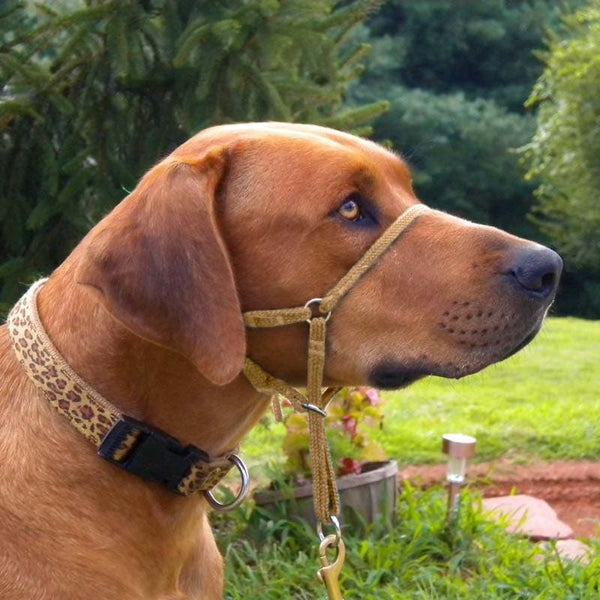
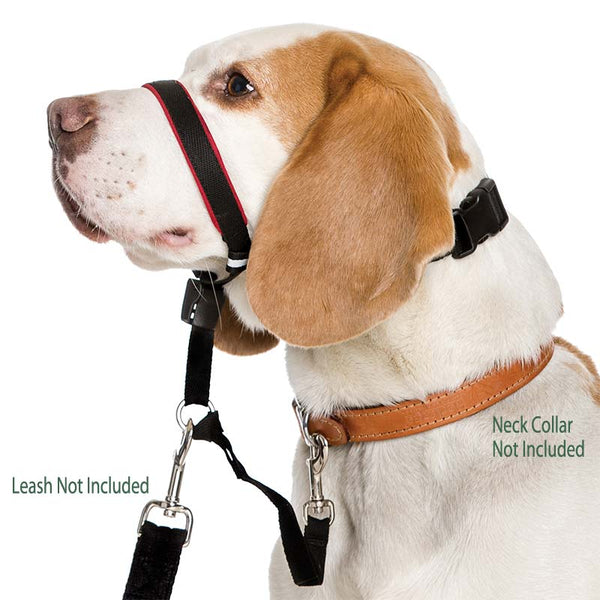
I have had it. 10 mo. Old male cavelier obsessed w/ sticks and eating them. I have been working on Leave it for over 2 mos. He is so strong that it is impossible to remove. I try to train with train treats but does not seem to work. I have ordered a gentle lead and plan on trying. Help!
J
I’m concerned my two year old miniature schnauzer loves to fetch sticks or just find branches sticks then lay down and start eating like it’s a bone. I take them away but she loves sticks. Is she lacking in nutrients ? Than you, susan Scarpa
I’m concerned my two year old miniature schnauzer loves to fetch sticks or just find branches sticks then lay down and start eating like it’s a bone. I take them away but she loves sticks. Is she lacking in nutrients ? Than you, susan Scarpa